Ideas & systems
Starting items
A new game begins with a Ledger of first things, and each entry knows its own place. This page shows how an entry finds it.
What it is
Starting items are the list of what a new game places before the player arrives. Each one is a component plus a count, and it is attached to a place. A starting item can go in a scene, in the player's backpack, on a shop shelf, or on the game's global shop.
How it works
- You choose a scope. The scope is where the item is attached. A place's list is used by every visit to that place. A single node can add its own items on top. A character's list is the player's backpack. A shelf is a place's shop. The global shop is for the whole game.
- A new game builds each place. It makes the place first. Then it adds the place's list, then the items tied to that exact node.
- Global items come last. After the start map is ready, the game adds global items and the global shop.
- The player is placed. The game finds the player's character, puts it in the start place and fills its backpack from its list.
Two details matter when you set a count:
- A count of 0 with a position is an empty slot. The game keeps a spot, and an action that gives its result "into this place" fills it there. A place that levels up can fill slots as a reward.
- A negative count in a shop is "Unlimited". The shelf never runs out. In Edit Mode, the shop dock has a Make stock unlimited button on each row.
In Vespera
In Vespera: the Ledger, the Stall and the Fields Play it
- Backpack. Frono's starting backpack holds one item: The Ledger of Making. There is nothing else, so a new game opens with the Ledger and its Pages bar at 0 of 7.
- Shop shelf. Maren's Stall at the Outpost has six shelf rows: Timber, Scrap Iron, Wheat Sheaf, Ember Tonic, Seed Packets and the Recipe: Hearth Loaf. Each has an unlimited count, so the shelf never runs out.
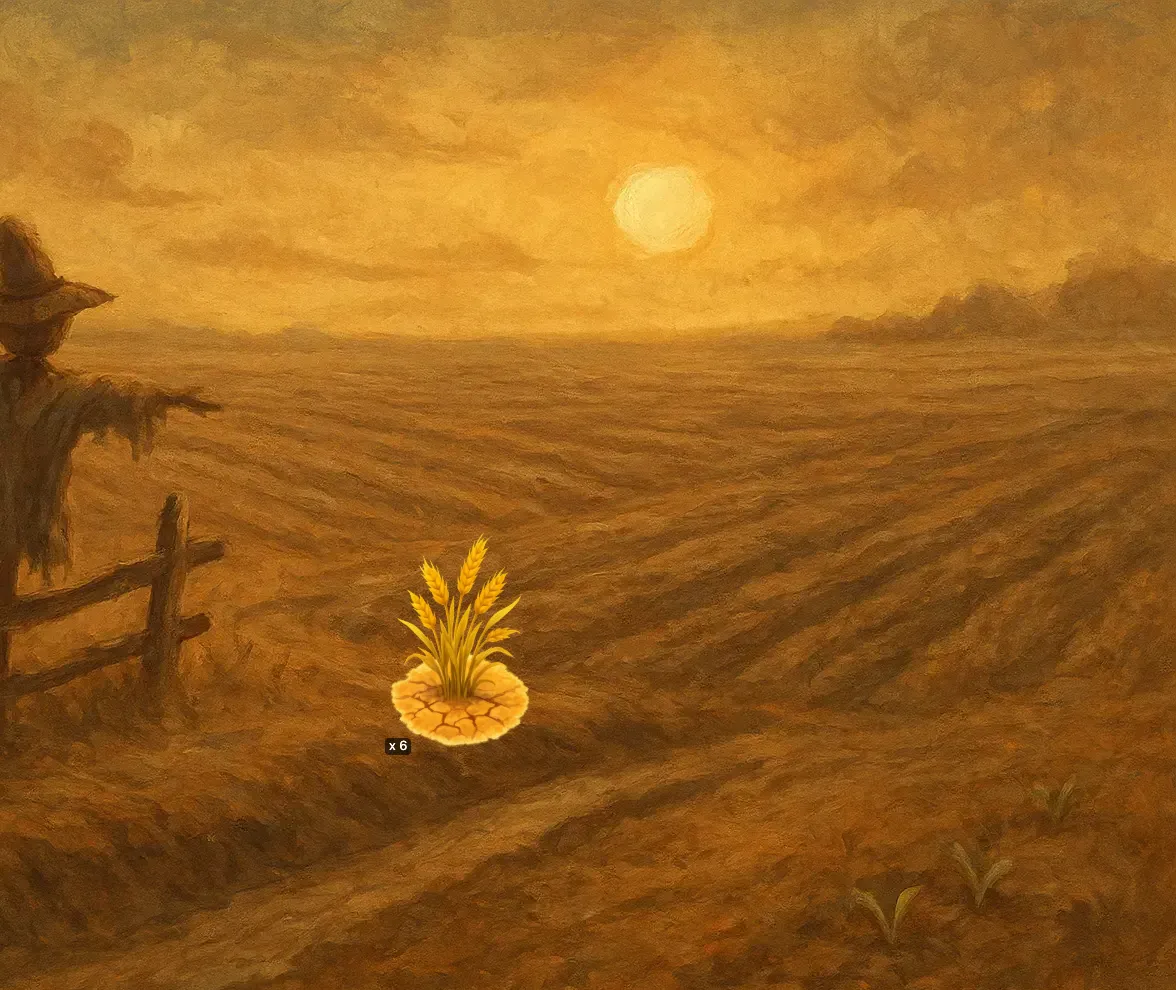
- Scene. The Withered Fields start with Surviving Wheat at a count of 6, and four more Surviving Wheat rows with a count of 0. Those are empty slots that fill when a harvest gives wheat back into the place.
Good to know
- A blank placement class means "use the component's own". The world admin and the agent both turn a blank into that, so clearing the override works as you expect.
- Items acquired in play are not starting items. Putting something in the Build Menu does not place it in a new game either.
- A character must be reachable. A game cannot start without a starting item for the player's character.
Under the hood
- A place does not need any starting item to be playable. Its basic contents come from the map. Starting items add to it.
- A place's own list is created the first time something is added to it, in Edit Mode or in the world admin. It is never shown as a thing of its own.
- A starting item tied to one node ignores any parent it also names when a game starts.
- Items the player gets during play, from loot, a purchase or a craft, have no starting item. They keep the component's placement class and arrive unplaced.
- Places on other maps are set up the first time the player travels to that map, all at once.
- A shop row is skipped when the game is exported if the thing it hangs from no longer exists. A row tied to a node, or the player's own character, is kept.
- The agent can author starting items. It sets exactly one of four scopes: a place's list, one node, a player's bag or the global shop.